
From Fire to Fortress
We Have Always Lived in the CastleThis flow follows the house’s transformation from an inherited, carefully ordered residence into a burned ruin that the sisters refashion as a defensible home.
increasing Bearing strength in each event
 decreasing
Bearing strength in each eventdecreasingThe Ordered Interior
The Ordered Interior
Objects fixed in place
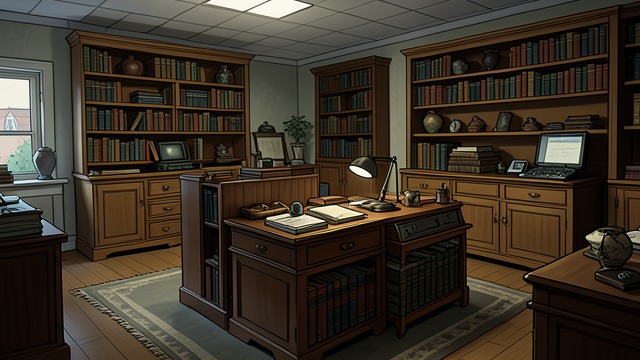
The Blackwood house is carefully maintained, with furniture, books, and inherited possessions returned to their proper places. The sisters preserve rooms associated with the family even when they rarely use them.
Domestic continuity
Constance’s cooking and cleaning make the house a dependable structure after the poisoning. Mary Katherine understands objects as part of a foundation that holds the family steady against the outside world.
The house’s order is a practice as much as a condition. It links the sisters to ancestors while limiting the changes they will accept.
Charles Occupies a Room
Charles Occupies a Room
A room reassigned
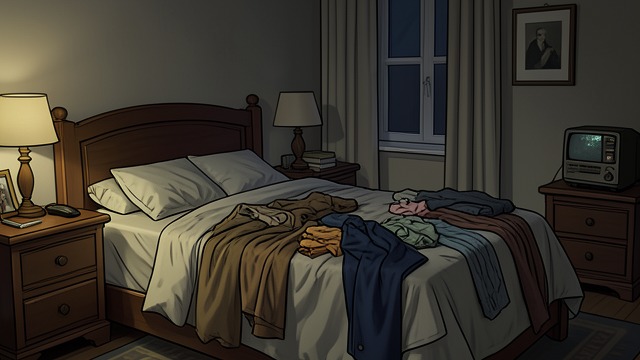
Charles sleeps in John Blackwood’s room and places his own belongings beside John’s things. Constance accepts this practical arrangement, while Mary Katherine sees it as contamination.
A domestic boundary crossed
The room has not merely been borrowed; it is part of a family space Mary Katherine believes should remain undisturbed. Charles’s use of it becomes a concrete image of the change he brings.
The home’s order is no longer maintained by everyone in the same way. Its rooms become contested territory within the family itself.
Fire in the Upper Rooms
Fire in the Upper Rooms
A room catches fire
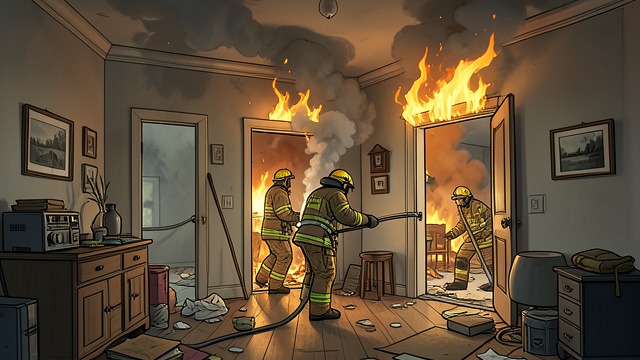
Charles’s unattended pipe starts the blaze in the room he occupies. The fire moves through the upper part of the house, threatening the rooms and stored possessions above the kitchen.
A physical transformation
The sisters leave the house as firefighters enter. The structure that had enclosed their routines is now exposed to flame, smoke, and a crowd.
The accident turns the symbolic dispute over Charles’s room into literal destruction. His presence leaves a lasting mark on the architecture of the Blackwood home.
The Mob’s Destruction
The Mob’s Destruction
Rooms made public
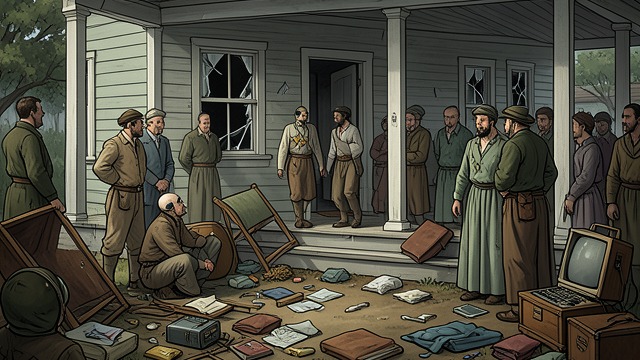
The villagers break windows, overturn objects, and carry the family’s private furnishings into the open. The sisters watch from the porch as the house’s protected interior becomes a spectacle.
Damage beyond the flames
The destruction spreads into the kitchen, dining room, and drawing room, reaching dishes, furniture, and treasured objects. The fire did not cause all of this damage; the crowd chose to continue it.
The house is attacked for what it represents as well as for what it contains. Its old separation from the Village becomes the reason the mob wants to enter and remake it.
A Ruin Made Livable
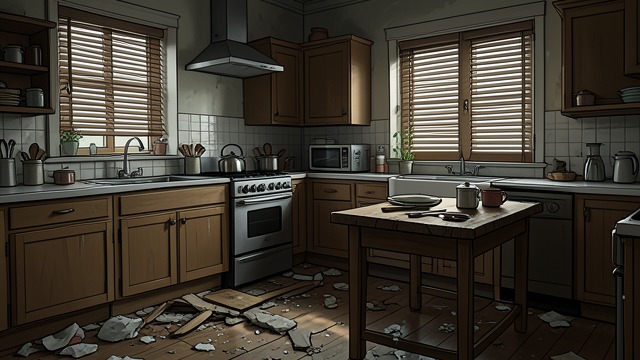
A Ruin Made Livable
Salvage and repair
The sisters preserve usable food, cups, and utensils, sweep rubble into closed rooms, and shut the shutters. Their work does not restore the old house but makes the kitchen habitable.
A new defensive design
Boards cover windows and barricades obstruct access around the sides. The ruined structure becomes recognizable to the sisters through the routines they establish within it.
The home’s meaning changes from inherited order to deliberate refuge. Its imperfections are accepted because the sisters have chosen how to live among them.
Before Charles’s arrival
On the day after Charles arrives
During dinner on the night of the fire
After the fire is put under control
In the weeks following the fire
